

Jagga Reddy Hits Back at KTR: A Political Clash Over VLF Radar Installation in Damagundam Reserve Forest
In the latest development on Telangana’s political front, Telangana Pradesh Congress Committee (TPCC) working president T. Jagga Reddy has come out in strong opposition to recent remarks made by K.T. Rama Rao (KTR), the working president of Bharat Rashtra Samithi (BRS). The heated exchange revolves around the installation of the Indian Navy’s Very Low Frequency (VLF) radar station in the Damagundam reserve forest, located in Vikarabad. While KTR has been critical of the project, suggesting it could be detrimental to the environment, Jagga Reddy defended the Congress government’s decision, emphasizing the strategic importance of the installation.
This political clash over the VLF radar station has not only highlighted the growing tensions between the Congress and BRS but also drawn attention to the balance between national security interests and environmental concerns. In this article, we will take an in-depth look at the controversy surrounding the VLF radar installation, the political rhetoric between the Congress and BRS, and the larger implications for Telangana’s political landscape and environmental policy.
The VLF Radar Station: A Strategic Asset for National Security
The Indian Navy’s VLF radar station in Damagundam reserve forest is a project of national importance, with far-reaching implications for India’s defense capabilities. Very Low Frequency (VLF) radar stations play a critical role in submarine communication, as they allow for long-range communication with submarines submerged deep underwater. The installation of the VLF radar station is expected to strengthen the Indian Navy’s operational reach and enhance the nation’s ability to monitor and control its maritime borders.
In light of these strategic advantages, the Congress-led Telangana government, under the leadership of Chief Minister A. Revanth Reddy, in collaboration with Union Defence Minister Rajnath Singh, laid the foundation stone for the project. The move was hailed as a major step towards bolstering India’s defense infrastructure, particularly in the southern region.
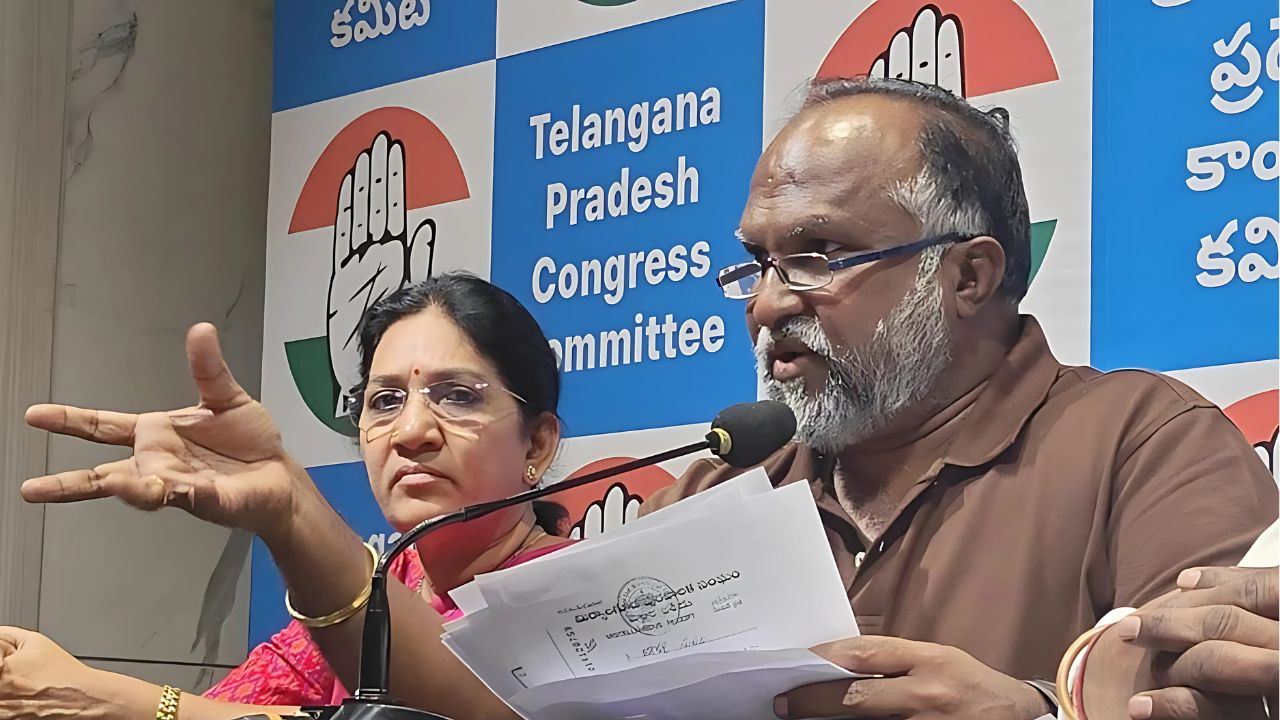
Jagga Reddy, in defense of the project, reiterated that the radar station is crucial for national security and is in line with India’s broader defense strategy. He emphasized that the Congress government’s decision to greenlight the project was made with careful consideration of both national security and the long-term interests of the state. “This radar installation is a critical defense asset, and our government’s priority is the safety and security of our country. Telangana is proud to contribute to the strengthening of India’s defense capabilities,” Reddy stated during a press conference at Gandhi Bhavan on October 22, 2024.
KTR’s Criticism: Environmental Concerns and Political Rhetoric
On the other side of the debate, BRS working president K.T. Rama Rao (KTR) has expressed concern over the environmental impact of installing the radar station in the Damagundam reserve forest. The reserve forest, a rich ecological zone known for its biodiversity and dense greenery, is home to several species of flora and fauna that could be adversely affected by large-scale infrastructure development.
KTR’s criticism of the project focuses on the need to preserve Telangana’s natural resources and protect its environment. He questioned whether the Congress government had conducted an adequate environmental impact assessment (EIA) before approving the radar installation. KTR further argued that alternative locations should have been considered, suggesting that the Damagundam reserve forest is not the most suitable site for such a large-scale defense project.
“While we acknowledge the importance of national security, it is essential to ensure that environmental safeguards are in place. Telangana has precious natural resources that must be preserved for future generations. The Congress government needs to explain why they chose the Damagundam reserve forest for this project and whether they have conducted a proper EIA,” KTR remarked during a recent public appearance.
KTR’s statements have struck a chord with environmental activists and local communities, who are concerned about the potential ecological damage caused by the radar installation. The Bharat Rashtra Samithi, which has positioned itself as a party committed to sustainable development, is using the issue to highlight its environmental credentials and accuse the Congress of prioritizing defense projects over ecological preservation.
Jagga Reddy’s Response: Defending Congress and Revanth Reddy’s Leadership
Jagga Reddy wasted no time in responding to KTR’s criticisms. During his press conference at Gandhi Bhavan, he hit back at the BRS leader, accusing him of playing politics with a national security issue. Reddy argued that KTR’s focus on environmental concerns was an attempt to distract the public from the strategic importance of the radar station and the Congress government’s efforts to strengthen India’s defense capabilities.
“The Congress government has always been committed to the environment, but we cannot allow political rhetoric to undermine a project that is essential for the country’s security. KTR’s criticisms are baseless and purely political. This radar station was approved after careful consideration, and we are confident that all necessary measures have been taken to mitigate any environmental impact,” Jagga Reddy asserted.
He also highlighted Chief Minister A. Revanth Reddy’s leadership in securing the project for Telangana and pointed out that the installation would bring long-term benefits to the state. “This project is not just about national security; it is also about putting Telangana on the map as a contributor to India’s defense infrastructure. Under Revanth Reddy’s leadership, we are ensuring that Telangana remains a key player in the nation’s strategic future,” Reddy added.
Environmental vs. Strategic Priorities: A Delicate Balance
The debate between Jagga Reddy and KTR reflects a broader challenge that governments often face: balancing environmental concerns with the need for infrastructural development, especially when it comes to projects with national security implications. While the Congress government has emphasized the strategic importance of the VLF radar station, KTR’s criticism underscores the importance of protecting natural ecosystems in the face of development.
This tension between development and environmental preservation is not unique to Telangana. Across India, infrastructure projects—especially those related to defense, energy, and urban expansion—often lead to clashes between policymakers and environmental advocates. In the case of the Damagundam radar station, the Congress government’s decision to proceed with the project signals its prioritization of national security over environmental considerations, at least for the time being.
However, the debate also raises important questions about how governments can strike a balance between development and conservation. Environmental activists and policymakers alike will be closely watching how the Congress government manages this delicate balance, particularly if public opposition to the radar installation grows.
Political Implications: Congress vs. BRS in Telangana
The dispute over the VLF radar installation comes at a time when both Congress and BRS are vying for political dominance in Telangana. Chief Minister A. Revanth Reddy’s Congress-led government is facing increasing pressure from BRS, which remains a formidable political force in the state. KTR’s criticism of the radar installation is part of a broader strategy to position BRS as the party of the people, particularly on issues related to environmental protection and sustainable development.
Jagga Reddy’s defense of the Congress government’s decision reflects the party’s focus on projecting itself as the defender of national security and development. By emphasizing the strategic importance of the VLF radar station, Congress is attempting to counter BRS’s environmental rhetoric with a narrative of progress and security.
The political implications of this debate will likely extend beyond the immediate issue of the radar installation. As both parties continue to jostle for public support, the clash over the Damagundam reserve forest may become a symbol of the broader ideological differences between Congress and BRS: Congress positioning itself as the party of national development, and BRS as the champion of environmental protection.
Conclusion: What’s Next for Telangana?
As the debate over the VLF radar installation unfolds, the people of Telangana are left to consider the broader implications of the project. While the Congress government remains steadfast in its support for the installation, local communities, environmental activists, and political leaders like KTR are calling for a closer examination of its environmental impact.
Ultimately, the outcome of this political clash will depend on how effectively both Congress and BRS can communicate their positions to the public. For Congress, the challenge will be to reassure the public that the project’s strategic benefits outweigh any potential environmental risks. For BRS, the challenge will be to convince voters that environmental preservation is a priority that should not be compromised, even in the face of national security concerns.
As Telangana’s political landscape continues to evolve, the debate over the VLF radar station in Damagundam reserve forest will likely remain a central issue in the coming months. Whether the project proceeds without further opposition or becomes a flashpoint in the state’s political discourse remains to be seen.