


Restoration of Nizam-Era Telangana Assembly Building: A Heritage Revival in Three Months
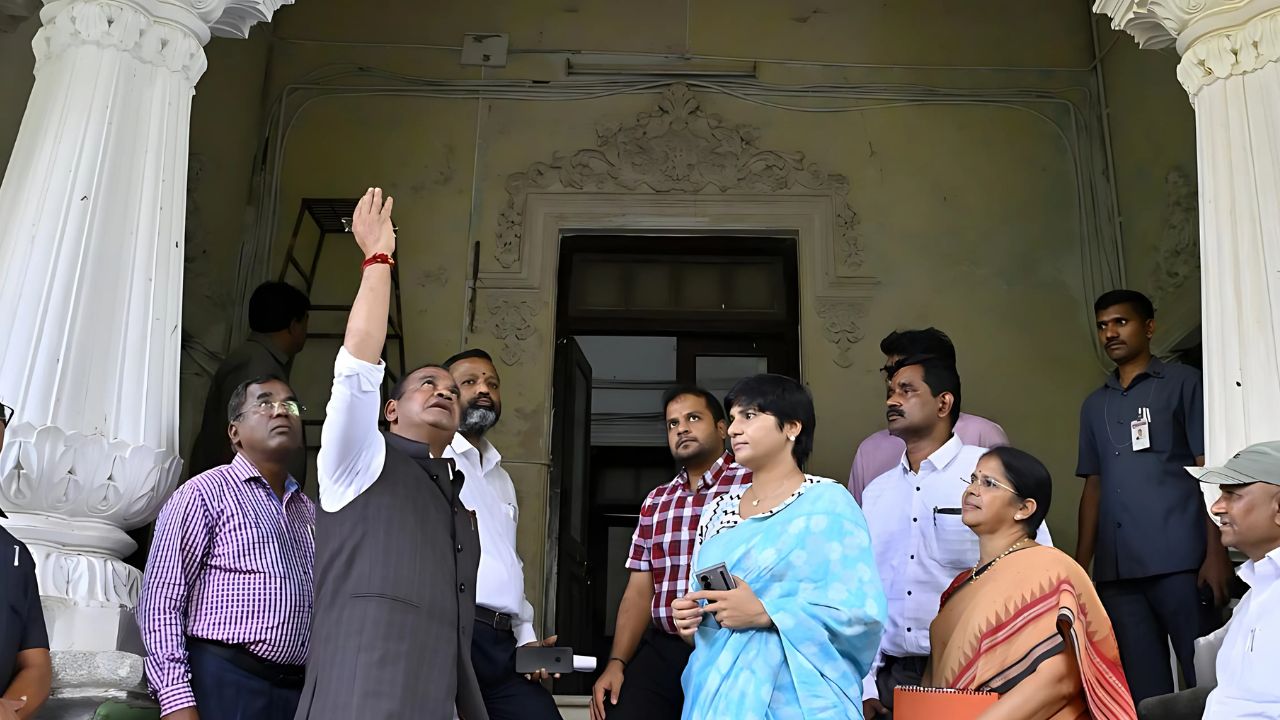
The restoration and refurbishment of Telangana’s 110-year-old Assembly building, a significant relic from the Nizam era, is underway and expected to be completed within three months. Telangana’s Roads and Buildings Minister, Komatireddy Venkat Reddy, along with Industries and Legislative Affairs Minister, Duddilla Sridhar Babu, recently inspected the site and reviewed the ongoing progress.
This project represents a critical effort to preserve the architectural heritage of the Asaf Jahi dynasty while modernizing the structure for future use as part of the state’s legislative complex. In this article, we delve into the significance of the heritage building, the intricacies of its restoration, and the broader impact of this initiative on preserving Telangana’s rich cultural legacy.
A Glimpse into History: The Nizam-Era Assembly Building
The Assembly building, constructed over a century ago, stands as a testament to the opulent and intricate architectural style of the Asaf Jahi rulers, who shaped much of Hyderabad’s urban landscape. The structure, which has witnessed numerous historical events and political changes, remains a symbol of Telangana’s past, blending elements of Indo-Saracenic architecture, European styles, and Mughal influences.
Once the seat of governance, this building has served various purposes throughout its long history, including functioning as the Hyderabad State Assembly during the Nizam’s rule. The legacy of the building is intertwined with Telangana’s identity, and its restoration has been a priority for the state government.
In recent years, the Telangana government has placed a renewed emphasis on preserving historical structures and incorporating them into the state’s modern landscape. As the Assembly complex grew, it became evident that the old building needed significant restoration work to preserve its integrity while adapting it to contemporary legislative needs.
The Restoration Process: Merging Tradition with Modernity
The restoration project, led by the Roads and Buildings department, aims to carefully refurbish the Assembly building, maintaining its architectural authenticity while upgrading its infrastructure for modern legislative functions. According to Minister Komatireddy Venkat Reddy, the government is committed to completing the restoration within three months, ensuring the heritage structure remains intact while blending seamlessly with the newly developed Assembly complex.
One of the key features of this restoration effort is the creation of a new central hall in the Parliament style, designed to be a gathering space for joint sessions and significant legislative events. The building will also serve as the new Assembly hall, preserving its historical significance while modernizing its functionality. Minister Duddilla Sridhar Babu emphasized that the heritage building will retain its original Asaf Jahi architectural style, with meticulous attention paid to the restoration of ornamental elements such as arches, domes, and windows, characteristic of the era.
The renovation process involves extensive research and consultation with heritage conservation experts to ensure that the building’s historic value is preserved. Specialized craftsmen are being brought in to restore the intricate designs and carvings, while advanced construction techniques are being employed to strengthen the structure.
Heritage Preservation: A Priority for Telangana
The restoration of the Nizam-era Assembly building is part of a larger effort by the Telangana government to preserve the state’s cultural and architectural heritage. Over the years, many historical structures in Hyderabad and across the state have been neglected or demolished to make way for modern development. However, the current government has taken a more proactive approach, recognizing the importance of safeguarding these structures as part of Telangana’s identity.
The decision to refurbish the old Assembly building and convert it into a functioning part of the legislative complex reflects this commitment. Minister Venkat Reddy stated that this initiative would not only protect Telangana’s heritage but also create a bridge between the state’s rich history and its dynamic future. The restored building is expected to become a focal point for both legislative activity and heritage tourism.
The restoration project has garnered widespread support from conservationists and historians, who have long advocated for the preservation of Hyderabad’s architectural gems. The project is seen as a model for future efforts to preserve and restore other heritage structures in the state, including palaces, public buildings, and religious sites that date back to the Nizam era and earlier.
The Challenges of Restoring a Heritage Building
Restoring a heritage building like the Nizam-era Assembly presents unique challenges. While maintaining the architectural style and historical elements is essential, the structure also needs to be upgraded to meet modern safety and functionality standards. This requires a delicate balance between preservation and innovation.
One of the primary challenges is ensuring that the building’s historical integrity is maintained while introducing new materials and technologies. The restoration team has faced the task of sourcing materials that match the original construction as closely as possible, including specific types of stone, wood, and plaster that were used over a century ago. Skilled artisans, trained in traditional methods of construction, are working to restore the ornamental details, including the intricate latticework, stained-glass windows, and decorative moldings that are a hallmark of the building’s Indo-Saracenic style.
Another significant challenge is the modernization of the building’s infrastructure. As the Assembly building will be used for legislative purposes, it needs to be equipped with modern amenities, including state-of-the-art communication systems, security features, and facilities for lawmakers and staff. These upgrades must be integrated into the historic structure without compromising its aesthetic or structural integrity.
Additionally, the building must meet contemporary standards for accessibility and safety, including compliance with fire regulations and earthquake-resistant measures. This requires the installation of new electrical, plumbing, and HVAC systems, which must be carefully concealed to preserve the visual authenticity of the building.
The Broader Impact: Reviving Telangana’s Heritage
The refurbishment of the Nizam-era Assembly building is more than just a restoration project—it is part of a broader effort to revive Telangana’s rich architectural heritage. Hyderabad, known for its historic landmarks such as the Charminar, Golconda Fort, and Chowmahalla Palace, is a city steeped in history. However, the pressures of urban development and modernization have led to the neglect and demolition of many historic structures.
The Telangana government’s focus on heritage preservation is seen as a positive step toward reversing this trend. By restoring the Assembly building and other historic sites, the government aims to create a sense of continuity between the state’s past and present, while also promoting tourism and cultural engagement.
Heritage conservationists have praised the government’s approach, noting that the preservation of historic buildings not only enhances the cultural fabric of the state but also contributes to its economic development. Heritage tourism, in particular, has the potential to attract visitors from around the world, boosting local economies and creating jobs.
The restoration of the Assembly building is expected to inspire similar projects across the state, encouraging both public and private efforts to preserve Telangana’s architectural heritage. The government has already announced plans to restore other historic buildings, including palaces, museums, and public monuments, as part of its broader cultural preservation strategy.
Conclusion: A New Era for Telangana’s Legislative Complex
As the Nizam-era Assembly building undergoes its transformation, it stands as a symbol of Telangana’s commitment to preserving its history while looking toward the future. The restoration project, led by Ministers Komatireddy Venkat Reddy and Duddilla Sridhar Babu, reflects a broader effort to protect the state’s heritage and ensure that future generations can appreciate the architectural and cultural legacy of the Asaf Jahi dynasty.
Once completed, the restored Assembly building will serve as a functional and symbolic center of Telangana’s legislative process, bridging the gap between the state’s past and its modern identity. It will stand as a reminder of the importance of heritage preservation in an era of rapid development and change, showcasing Telangana’s ability to honor its history while embracing the future.