

In a significant move aimed at strengthening urban governance and enhancing the protection of Hyderabad’s critical assets, the Telangana Cabinet has granted full powers to the Hyderabad Disaster Response and Asset Monitoring and Protection Authority (HYDRAA). This decision will enable the authority to act decisively, especially in addressing longstanding issues like encroachments on Full Tank Levels (FTL) and buffer zones surrounding water bodies within Greater Hyderabad. This comes at a time when increasing urbanization and unauthorized construction are posing severe risks to the city’s environmental and infrastructural stability.
Empowering HYDRAA: A Step Towards Urban Resilience
HYDRAA, an institution established to handle disaster management and monitor vital city assets, has now been given full freedom to carry out its duties, particularly in areas plagued by encroachments. These areas include FTLs and buffer zones, which are crucial for flood management, groundwater recharge, and maintaining the ecological balance in and around Hyderabad’s numerous lakes and water bodies.
The Cabinet’s decision followed intense deliberations over HYDRAA’s scope of authority. Various government departments had raised concerns and sought amendments to their respective Acts to clarify HYDRAA’s jurisdiction and the legal framework under which it operates. The empowerment of HYDRAA is expected to eliminate these ambiguities and ensure that the authority can work unhindered in its mission to clear encroachments, safeguard public assets, and mitigate disaster risks.
The Role of HYDRAA in Hyderabad’s Urban Landscape
HYDRAA plays a crucial role in the city’s urban planning and disaster response framework. It has been tasked with overseeing key city assets such as roads, bridges, drainage systems, and natural water bodies, which are vital for both everyday functioning and emergency preparedness. The authority is also responsible for identifying and managing risks related to natural disasters such as floods, which have become increasingly common in Hyderabad due to rapid urbanization, encroachment on natural drainage systems, and climate change.
By granting full powers to HYDRAA, the Telangana government aims to make the authority more effective in carrying out its mandate. This includes the ability to remove illegal constructions, particularly those that block natural waterways, and take swift action against those violating urban planning and zoning laws. The full empowerment of HYDRAA will also help the government implement its ambitious urban renewal and disaster resilience strategies more efficiently.
Addressing Encroachments: The First Priority
The decision to empower HYDRAA has been driven, in large part, by the need to address widespread encroachments on water bodies and their buffer zones. Hyderabad, like many other rapidly growing cities, has witnessed a sharp rise in illegal construction in areas that are critical for flood management. Encroachments on FTLs and buffer zones have exacerbated the city’s vulnerability to floods, as they obstruct the natural flow of water and reduce the capacity of lakes and tanks to absorb rainwater.
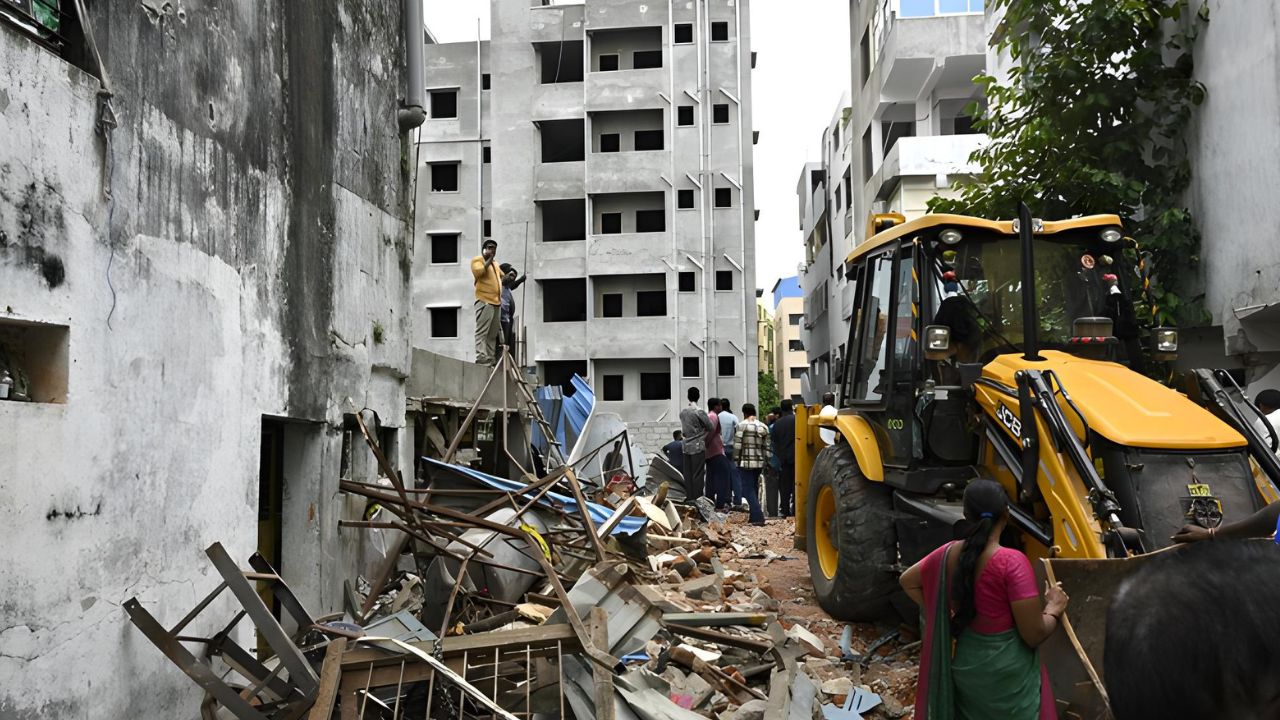
In recent years, several localities in Hyderabad have experienced flash floods, largely due to unauthorized constructions in these sensitive areas. Ramnagar, where HYDRAA recently carried out a demolition drive to remove illegal structures, is just one example of the challenges the authority faces. These encroachments not only put local residents at risk but also threaten the long-term sustainability of the city’s water management system.
Under the new framework, HYDRAA will have the legal backing to take immediate action against such violations without waiting for prolonged bureaucratic processes. The authority will be able to conduct demolition drives, seize assets, and levy fines on violators, ensuring that encroachments are removed swiftly and efficiently.
SLBC Works and Infrastructure Development: A Three-Year Deadline
In addition to empowering HYDRAA, the Telangana Cabinet has also approved revised estimates for the ongoing Sri Ram Sagar Lift Irrigation Scheme (SLBC) works. The project, which is critical for providing irrigation and drinking water to several districts, has faced delays due to various technical and administrative hurdles. With the revised estimates in place, the government has set a three-year deadline for the completion of the project.
The SLBC works are essential for augmenting water supply to the Hyderabad Metropolitan area and surrounding districts. The project involves the construction of a series of lift irrigation schemes, reservoirs, and canals to divert water from the Godavari River. Once completed, it is expected to provide a sustainable source of water for agriculture, industry, and domestic use, reducing the city’s dependence on monsoon rains and addressing the recurring problem of water scarcity in the region.
The Cabinet’s decision to expedite the SLBC works aligns with its broader vision of improving the city’s water security and resilience to climate change. The project will not only benefit Hyderabad but also several other districts in Telangana that rely on the Godavari basin for their water needs.
A Comprehensive Approach to Disaster Management
The recent rains in Hyderabad, which caused flooding in several parts of the city, underscore the importance of a robust disaster management system. The Cabinet’s move to grant full powers to HYDRAA is part of a broader effort to enhance the city’s disaster response capabilities and ensure that it is better prepared to handle both natural and man-made disasters.
In addition to addressing encroachments, HYDRAA will also be responsible for monitoring the condition of key infrastructure assets, such as bridges, flyovers, and drainage systems. The authority will use advanced technology, including drones and satellite imagery, to conduct real-time assessments of these assets and identify potential vulnerabilities.
This proactive approach will help the city prevent disasters before they occur, rather than simply responding to them after the fact. By focusing on asset protection and risk management, HYDRAA aims to make Hyderabad a safer and more resilient city in the face of growing environmental challenges.
Public Involvement and Awareness
While HYDRAA has been empowered to take decisive action against encroachments and protect public assets, the success of its efforts will also depend on public cooperation and awareness. The Telangana government has emphasized the need for greater community involvement in urban planning and disaster management. Residents, particularly those living in flood-prone areas, are being urged to follow urban zoning laws, avoid constructing illegal structures, and participate in local initiatives aimed at protecting the city’s water bodies and green spaces.
To support these efforts, the government is planning to launch a public awareness campaign that will educate citizens about the importance of preserving FTLs and buffer zones, as well as the consequences of illegal encroachments. This campaign will highlight the critical role that water bodies play in maintaining the ecological balance of the city and preventing disasters such as floods.
Conclusion: A New Era of Urban Governance
The Telangana Cabinet’s decision to give full powers to HYDRAA marks a new era in Hyderabad’s urban governance. By empowering the authority to take swift and decisive action against encroachments and protect the city’s assets, the government is laying the groundwork for a more resilient and sustainable future.
As Hyderabad continues to grow and evolve, the challenges of urbanization will only become more complex. The city’s ability to manage these challenges will depend on strong institutions like HYDRAA, which can enforce regulations, protect public assets, and mitigate disaster risks. With its new powers, HYDRAA is now well-positioned to play a leading role in shaping the city’s future and ensuring that it remains a safe and vibrant place for its residents.
As the city moves forward, it is clear that a balance must be struck between development and environmental sustainability. The decisions made today will determine whether Hyderabad can achieve that balance and build a city that is not only prosperous but also resilient in the face of an uncertain future