


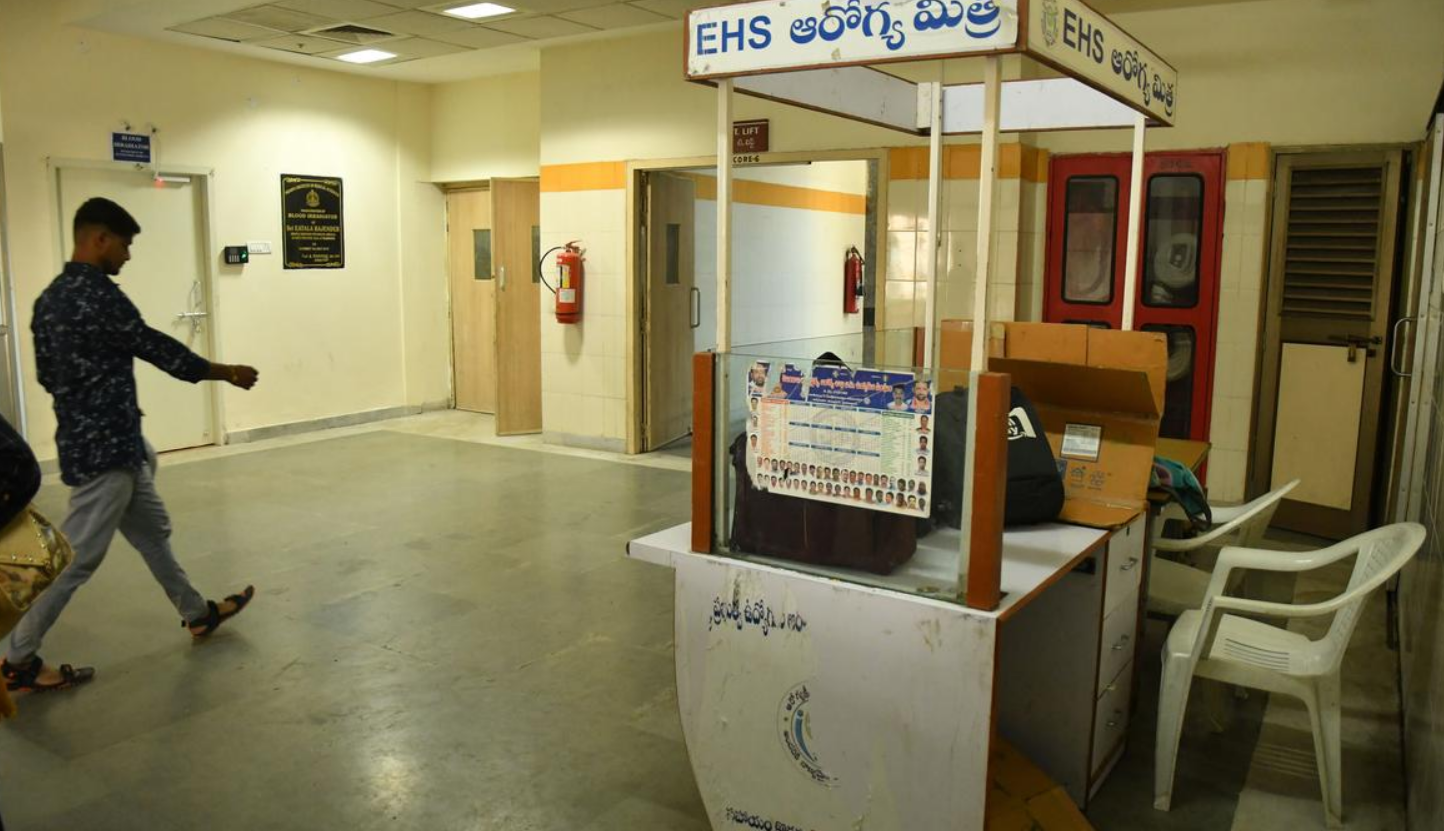
Healthcare in Telangana has entered a tense phase as Aarogyasri services remain suspended across private hospitals, leaving thousands of patients stranded without access to critical treatments. The situation, ongoing for weeks, has sparked outrage among families who depend on the scheme for life-saving procedures, especially in cases of cardiac care, cancer treatment, and kidney dialysis.
The Aarogyasri Scheme
A flagship health insurance initiative, Aarogyasri was launched to provide financial coverage to economically weaker sections of society. It covers nearly 1,400 medical procedures, including surgeries and specialized care, across both government and empaneled private hospitals. The scheme has long been a lifeline for those unable to afford high medical expenses.
However, the current suspension has effectively cut off patients from private hospital facilities, pushing them toward overcrowded government hospitals that are already struggling with heavy caseloads.
Why Services Are Suspended
Private hospitals argue that the government owes them significant arrears under the scheme. Representatives of the Telangana Network Hospitals Association (TNHA) claim pending dues amounting to several hundred crores have crippled operations.
Hospitals say they can no longer continue without payments, as costs of consumables, medicines, and manpower remain high. “We are not against the scheme or the patients. But without timely reimbursement, it is impossible to keep running such services,” a TNHA spokesperson explained.
Impact on Patients
The hardest hit are poor families who rely on Aarogyasri for emergency treatments. Patients requiring chemotherapy, heart surgeries, or kidney transplants are being turned away from private hospitals. Many are forced to travel long distances to government hospitals, which are facing overwhelming crowds.
Doctors in state-run institutions warn that the sudden shift of patients is causing delays in surgeries and compromising the quality of care. Relatives of patients have been protesting outside hospital gates, demanding immediate restoration of services.
Government’s Response
The Telangana government insists that it is committed to Aarogyasri and is working to resolve the deadlock. Health department officials acknowledge the pending dues but say the process of clearing them is underway. They have appealed to private hospitals to reconsider their stance, emphasizing that patients should not be made to suffer.
Meanwhile, the Chief Minister’s office has directed finance officials to prioritize disbursement of arrears. But hospitals argue that assurances without deadlines are not enough.
Political Reactions
The crisis has quickly taken on political overtones. Opposition parties have accused the ruling government of neglecting healthcare and failing to protect the poor. They argue that despite Telangana’s economic growth, the state has not managed its welfare schemes effectively.
Protests organized by opposition leaders have intensified pressure on the government, with calls for an all-party discussion in the assembly.
Civil Society and Activist Role
NGOs and activist groups have stepped in to assist patients by arranging crowd-funding for urgent treatments. They warn, however, that such stopgap measures cannot replace a structured healthcare safety net like Aarogyasri.
Healthcare rights groups are demanding a transparent audit of the scheme’s finances, citing allegations of inefficiency and corruption in reimbursements.
Economic Angle
Analysts highlight that the crisis reflects deeper structural issues in Telangana’s healthcare financing. Rising costs in private hospitals and delayed government payments have created a mismatch that threatens the sustainability of the scheme.
Economists argue that unless the government ensures regular fund allocation and timely settlements, such confrontations will recur, jeopardizing the credibility of welfare programs.
Future Implications
If the deadlock persists, the state risks eroding public trust in Aarogyasri, one of its most celebrated initiatives. Patients unable to access private care could be left with limited treatment options, undermining the very objective of the scheme.