

Introduction
The Malakpet IT Tower, a highly anticipated project aimed at bringing employment opportunities and fostering IT and ITES development in the Malakpet area of Hyderabad, has faced significant delays since its foundation stone was laid over a year ago. Despite the initial enthusiasm, the project is yet to commence in earnest, primarily due to bureaucratic hurdles and political transitions. The delays have frustrated locals, who had hoped the tower would boost employment and rejuvenate development in the Old City area. Questions have also emerged about how other regional projects, like the Musi rejuvenation, might affect the IT tower’s progress. However, officials and political leaders have reassured the public that the two projects are independent of each other.
Project Background and Vision
The idea for an IT Tower in Malakpet was conceived as part of the broader push by the Telangana government to decentralize IT development across the city, ensuring that growth was not confined to traditional hubs like HITEC City and Gachibowli. The government envisioned the Malakpet IT Tower as a major driver of local economic development, particularly in the Old City areas of Hyderabad, which have historically lagged behind in terms of industrial and technological development.
On October 2, 2023, former IT Minister K.T. Rama Rao, along with Hyderabad MP and AIMIM chief Asaduddin Owaisi, laid the foundation stone for the Rs. 700 crore project near PVR Mall in Malakpet. Spread across 11 acres, the state-of-the-art IT Tower was designed to offer 1.5 million square feet of built-up space for IT and ITES companies. The project was touted to create approximately 50,000 jobs, providing a much-needed boost to employment in the region.
Hopes for Employment and Economic Development
The announcement of the Malakpet IT Tower was met with widespread optimism. The promise of 50,000 jobs was a beacon of hope for local residents, especially the youth, who have been keen to access better employment opportunities without leaving their communities. The location of the IT Tower in Malakpet, a part of the city that has historically been overshadowed by more developed IT hubs, was seen as a strategic move to stimulate economic activity in the Old City.
The project was also viewed as a part of the government’s broader vision to make Hyderabad a global IT hub. By decentralizing the IT industry, the government hoped to reduce pressure on existing infrastructure in HITEC City and Gachibowli while ensuring more balanced economic growth across the city. K.T. Rama Rao, during the foundation-laying ceremony, predicted that the Malakpet IT Tower would become a new landmark for the area, eventually replacing the Malakpet TV Tower in the public consciousness. He assured the people that the IT Tower would be completed within 36 months, sparking excitement and anticipation among locals.
Delays and Bureaucratic Hurdles
Unfortunately, despite the fanfare surrounding the foundation-laying ceremony, the project has encountered significant delays. Over a year has passed, and the construction of the IT Tower has yet to commence. Telangana Industrial Infrastructure Corporation (TGIIC), the government agency entrusted with overseeing the project, cited procedural delays as the primary reason for the stagnation.
According to a senior TGIIC official, the government still needs to sign agreements with the selected bidder to begin construction. “Agreements have to be signed with the bidder for commencing the works. Hopefully, it would be done in November,” the official explained. While the official expressed hope that the project would move forward soon, this has done little to assuage the concerns of the local population, who remain skeptical after months of inactivity.
The delay has been attributed to several factors, including the timing of the foundation-laying ceremony. Soon after the ceremony took place, the Telangana Assembly elections were announced, which shifted the focus of the government’s attention. Following the Assembly elections, the country entered into Lok Sabha election season, further delaying administrative processes as officials were preoccupied with election-related duties. While elections are an integral part of democracy, the timing of these political events contributed to the slowdown of the IT Tower project, leaving its future in limbo.
Political Transitions and the Musi Rejuvenation Project
In addition to election-related delays, political transitions in the Telangana government have also played a role in the uncertainty surrounding the Malakpet IT Tower. With A. Revanth Reddy taking over as Chief Minister, there has been a reshuffling of key portfolios, including the IT Ministry, which is now headed by D. Sridhar Babu. During a press conference at the Secretariat last week, Chief Minister Revanth Reddy was asked whether the ongoing Musi rejuvenation project might impact the Malakpet IT Tower. His response was clear: “It had nothing to do with the Musi project.”
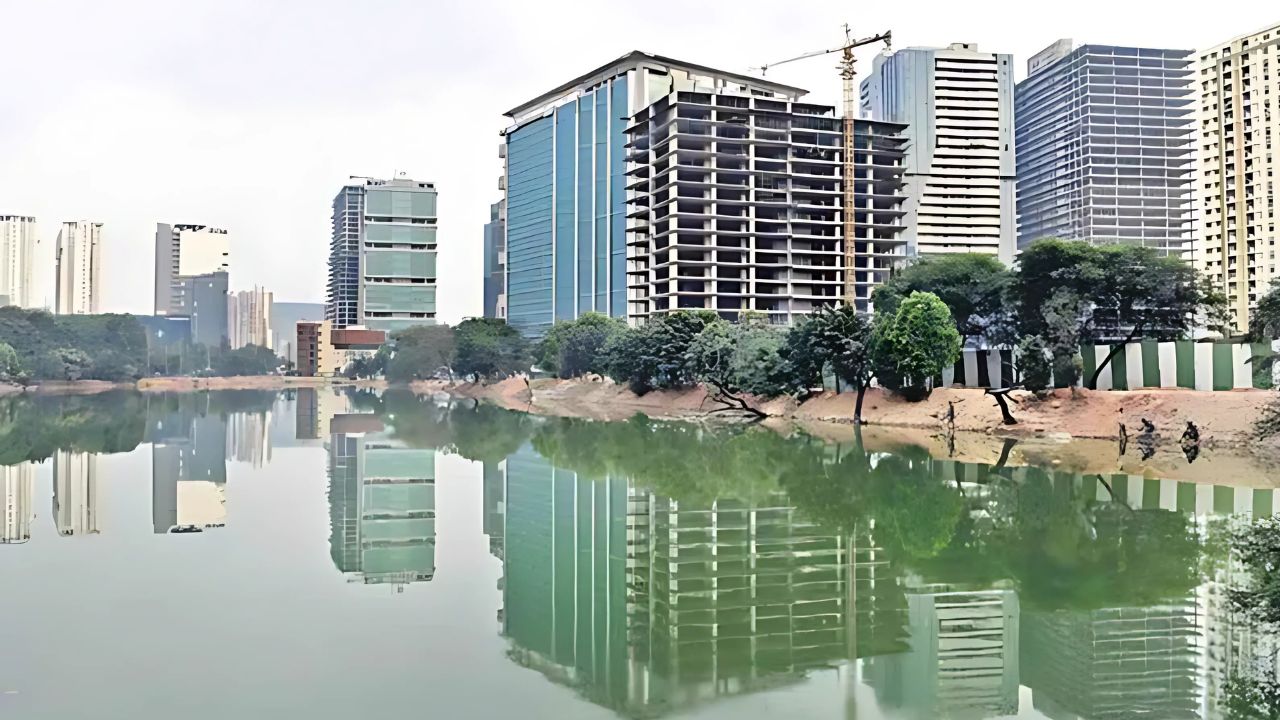
The Musi River rejuvenation, another high-profile project aimed at transforming Hyderabad’s environmental landscape, has been a subject of intense debate. The government’s goal is to clean and restore the Musi River, which flows through Hyderabad, making it a centerpiece of urban development while addressing long-standing pollution issues. Given the IT Tower’s proximity to the Musi River, there were concerns about potential conflicts between the two projects.
However, Revanth Reddy reassured the public that the IT Tower project and the Musi rejuvenation efforts were distinct initiatives with no direct overlap. “It will be addressed in the IT policy,” he said, implying that any concerns would be handled within the broader framework of the state’s IT strategy. He added that the new IT Minister, D. Sridhar Babu, would provide more details as needed.
Reactions from Local Leaders and Stakeholders
Interestingly, despite the delays, local leaders have remained supportive of the project. Hyderabad MP Asaduddin Owaisi, who had accompanied K.T. Rama Rao during the foundation-laying ceremony, praised the initiative, highlighting its potential to bring development and job opportunities to the Old City. During a recent public event, Owaisi reiterated that the Malakpet IT Tower was a “game changer” for the region and expressed optimism that the project would eventually come to fruition.
For Owaisi, the IT Tower represents more than just a physical structure—it symbolizes a commitment to bridging the gap between the Old City and the rest of Hyderabad. Historically, the Old City has been perceived as underdeveloped compared to other parts of Hyderabad, particularly areas like HITEC City, which have benefited from significant government investment in IT infrastructure. By locating the IT Tower in Malakpet, the government is signaling its intention to spread the benefits of the IT boom more evenly across the city.
However, not everyone has been patient with the slow progress. Many local residents, especially those who were banking on the job opportunities the IT Tower was expected to create, have expressed frustration with the delays. “We were promised 50,000 jobs, but more than a year later, there’s no sign of the IT Tower being built,” said Ahmed Ali, a resident of Malakpet. “The government needs to deliver on its promises.”
Local business owners have also been affected by the delay. Many had anticipated a rise in demand for services and amenities in the vicinity of the IT Tower once construction began. From small restaurants to real estate developers, several local entrepreneurs had prepared to benefit from the expected influx of professionals to the area. “We were hoping that the IT Tower would bring more people to Malakpet and boost our businesses,” said Rajesh Patel, who runs a small restaurant near the PVR Mall. “But with the project delayed, our hopes are on hold.”
Broader IT Policy and Future Prospects
The delay in the Malakpet IT Tower project comes at a time when Telangana is actively positioning itself as one of India’s leading IT destinations. Under the leadership of K.T. Rama Rao, the state’s IT policy has focused on expanding IT infrastructure beyond the established tech hubs of HITEC City and Gachibowli. By promoting projects like the Malakpet IT Tower, the government aims to ensure more balanced growth across Hyderabad.
The state’s efforts have not gone unnoticed. Telangana has consistently ranked among the top Indian states in attracting IT investments, and the IT sector remains a crucial driver of the state’s economy. According to recent reports, Telangana’s IT exports reached an all-time high in 2023, with Hyderabad emerging as a preferred destination for multinational corporations setting up their offices. The government’s commitment to fostering innovation, providing a business-friendly environment, and investing in infrastructure has helped the state build a robust IT ecosystem.
Despite the delays in Malakpet, experts believe the project still has the potential to succeed. “Once the agreements are signed and construction begins, the IT Tower will be a catalyst for development in the Old City,” said a senior official from the Telangana IT Department. “It’s important to remember that these projects take time, especially when elections and political changes are involved.”
Conclusion: A Delayed Dream with Uncertain Timelines
The Malakpet IT Tower remains a project of immense potential, one that promises to bring much-needed employment and development to an underdeveloped part of Hyderabad. However, over a year since its foundation stone was laid, the project’s future is still shrouded in uncertainty. While political leaders have reaffirmed their commitment to completing the IT Tower, the bureaucratic delays and changing political landscape have pushed the timeline back