

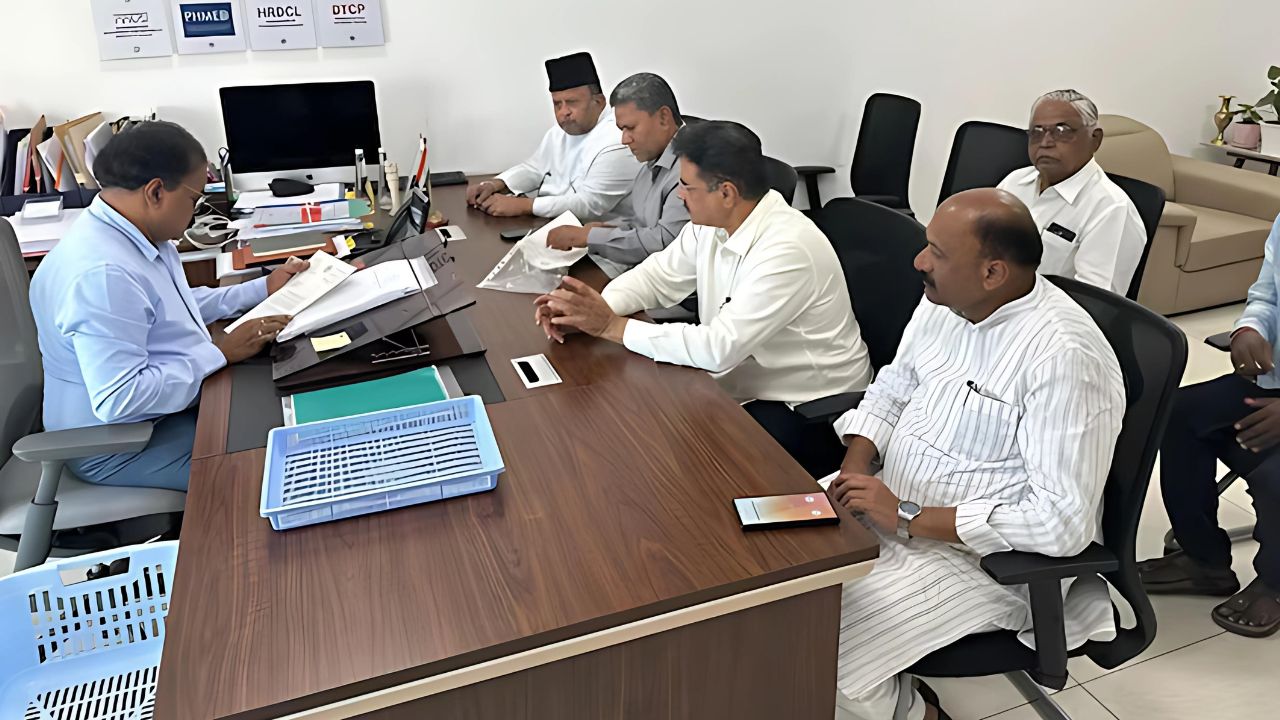
The All India Majlis-e-Ittehadul Muslimeen (AIMIM) has recently raised objections to what it termed an “illegal” survey being conducted at the Musi riverfront in Telangana. A delegation of AIMIM MLAs, including prominent leaders such as Ahmed Balala Saab, Mubeen Saab, Zulfeqar Saab, and Kausar Mohiuddin, approached the Municipal Administration and Urban Development (MAUD) to formally submit their concerns regarding the survey. The riverfront project has been a topic of intense debate, with local residents and stakeholders voicing a range of opinions on the developmental plans, environmental impact, and potential displacement of communities. AIMIM’s intervention brings a political dimension to the unfolding scenario, amplifying calls for a more transparent and consultative approach to the proposed development.
In this article, we will delve into the AIMIM’s objections, the details of the Musi riverfront project, the responses from the government and local authorities, as well as the broader implications for urban development, environmental sustainability, and the welfare of the local communities affected by these plans.
Background of the Musi Riverfront Project
The Musi riverfront development project has been envisioned as a major urban renewal initiative aimed at transforming the area along the river into a thriving hub for tourism, recreation, and commercial activity. The project is part of the Telangana government’s broader efforts to modernize the state’s infrastructure and attract investment. However, the plan has encountered opposition from various quarters, including environmentalists, heritage activists, and political parties like AIMIM.
For years, the Musi River, which runs through Hyderabad, has faced issues such as pollution, encroachment, and neglect. The Telangana government’s initiative to revitalize the riverfront includes cleaning the river, building promenades, developing green spaces, and constructing commercial and residential complexes along its banks. While these plans have been welcomed by some as a necessary step towards urban renewal, others have raised concerns over the environmental impact and the displacement of marginalized communities living along the riverbanks.
AIMIM’s Objections to the Survey
AIMIM, a political party with a significant presence in Telangana, has consistently advocated for the rights of underrepresented and marginalized communities, particularly in Hyderabad. The party’s delegation, led by Ahmed Balala Saab, Mubeen Saab, Zulfeqar Saab, and Kausar Mohiuddin, raised serious objections to the ongoing survey at the Musi riverfront, labeling it as “illegal.” The delegation submitted a memorandum to the Municipal Administration and Urban Development (MAUD) department, calling for an immediate halt to the survey and a thorough investigation into its legality.
According to the AIMIM MLAs, the survey was being conducted without proper consultation with the local communities or their elected representatives. They expressed concerns that the survey could lead to forced evictions of residents living along the river, many of whom belong to economically disadvantaged sections of society. Ahmed Balala Saab, speaking on behalf of the delegation, emphasized that any development project must prioritize the welfare of the people and not result in their displacement.
“We are not against development, but we are strongly opposed to any actions that undermine the rights of the people living in these areas. The survey is being conducted without transparency, and we fear that it could lead to the forced eviction of thousands of residents,” Balala Saab said. He further added that the government must ensure that any project undertaken is in compliance with the law and respects the rights of the affected communities.
Concerns Over Environmental and Heritage Impact
In addition to the concerns over potential displacement, AIMIM has also raised objections to the environmental and heritage impact of the Musi riverfront project. The Musi River, historically a lifeline for Hyderabad, is not only an important waterway but also a cultural and historical landmark. The river has witnessed centuries of history, and its banks are home to several heritage structures.
Environmentalists and heritage activists have argued that the large-scale development along the riverfront could lead to the destruction of the natural ecosystem and the degradation of historical sites. AIMIM’s objections align with these concerns, with the party calling for a more environmentally sustainable approach to the project. Zulfeqar Saab, one of the AIMIM MLAs in the delegation, highlighted the importance of preserving the river’s natural and historical significance.
“We cannot afford to lose our heritage and environment in the name of development. The Musi riverfront is not just a piece of land to be commercialized; it is a vital part of Hyderabad’s history and ecosystem. The government must consider alternative approaches that do not harm the environment or erase our cultural heritage,” Zulfeqar Saab said.
Demands for Transparency and Public Consultation
A key demand from AIMIM is greater transparency in the planning and execution of the Musi riverfront project. The party has called on the Telangana government to engage in meaningful public consultation with local residents, environmentalists, and heritage experts before moving forward with any surveys or construction activities. AIMIM believes that such consultations are essential for ensuring that the project benefits the community as a whole and does not disproportionately harm vulnerable populations.
Kausar Mohiuddin, another AIMIM MLA, stressed the need for a participatory approach to urban development. “Development must be inclusive and participatory. The people who live along the Musi River have a right to be involved in decisions that affect their lives and livelihoods. The government must hold public hearings and allow for a transparent dialogue between all stakeholders before proceeding with the project,” he said.
Mohiuddin also pointed out that the current lack of transparency and consultation has eroded trust between the government and the affected communities. He warned that if the government continues to ignore the voices of the people, it could lead to widespread unrest and protests.
Government’s Response to AIMIM’s Objections
In response to AIMIM’s objections, the Municipal Administration and Urban Development (MAUD) department has stated that the survey being conducted is part of the preliminary groundwork for the Musi riverfront project. Officials from the department have claimed that the survey is legal and is being carried out in accordance with the state’s urban development policies.
A senior official from the MAUD department, who spoke on the condition of anonymity, stated that the survey is aimed at assessing the land along the riverbank to determine the feasibility of the project. “The survey is an essential part of the planning process. We are taking all necessary steps to ensure that the project is in compliance with environmental and heritage regulations. No decisions have been made regarding evictions or relocations at this stage,” the official said.
The official also mentioned that the government is open to dialogue with AIMIM and other concerned parties to address their concerns. “We understand that there are concerns, and we are willing to engage with all stakeholders. The project is still in the planning phase, and we are committed to ensuring that it is carried out in a manner that benefits the city and its people,” he added.
The Broader Political and Social Context
AIMIM’s objections to the Musi riverfront survey must be understood within the broader political and social context of Telangana. As a party with a strong base among the Muslim population in Hyderabad, AIMIM has historically positioned itself as a defender of the rights of marginalized communities, particularly those living in urban areas. The party’s opposition to the survey is consistent with its advocacy for the protection of economically disadvantaged residents who are often the first to be affected by large-scale development projects.
In recent years, urban development projects in Hyderabad and other major Indian cities have been met with resistance from various quarters, including political parties, activists, and local residents. The tension between the need for modernization and the protection of local communities and the environment is a recurring theme in urban development debates. AIMIM’s intervention in the Musi riverfront project reflects this ongoing struggle and highlights the need for more inclusive and equitable approaches to urban planning.
The Way Forward: Balancing Development and Community Welfare
The controversy surrounding the Musi riverfront project underscores the complex challenges of urban development in rapidly growing cities like Hyderabad. On the one hand, there is a pressing need for modernization and infrastructure development to accommodate the city’s expanding population and economy. On the other hand, there is a legitimate concern about the social, environmental, and cultural costs of such development.
As the Telangana government moves forward with its plans for the Musi riverfront, it will need to carefully balance these competing interests. A key priority must be the protection of the rights of local communities, particularly those living along the riverbank. Forced evictions and displacement could have severe social and economic consequences for these communities, exacerbating existing inequalities in the city.
At the same time, the government must also ensure that the project is environmentally sustainable and respects the heritage of the Musi River. This will require a more consultative approach, involving dialogue with environmentalists, heritage experts, and local residents. Public consultations and hearings should be an integral part of the planning process, allowing for a more inclusive and transparent decision-making process.
In conclusion, the AIMIM’s objections to the Musi riverfront survey have brought to light important issues related to urban development, environmental sustainability, and community welfare. As the debate continues, it is crucial that all stakeholders work together to find a solution that balances the need for development with the rights and well-being of the people of Hyderabad. Only through a collaborative and transparent approach can the city achieve its vision of a modern, sustainable, and inclusive future.
.