


Hyderabad Gears Up for Ganesh Chaturthi: Eco-Friendly Ganesha Idols Lead the Way
As Ganesh Chaturthi approaches this Saturday, Hyderabad is abuzz with festive energy, with streets adorned by vibrant parades of Ganesha idols in various colors and sizes. From small clay idols to grand figures depicting Lord Ganesha seated on animals like cows and lions, the city is preparing to host elaborate pandals, celebrating one of the most cherished festivals in India.
This year, Hyderabad is witnessing a significant shift toward environmental consciousness, with a growing number of households opting for eco-friendly Ganesha idols made from clay and natural colors. This shift reflects a broader trend as communities strive to reduce the environmental impact of the festival while preserving its traditional essence.
Khairatabad’s Tallest Ganesha Idol: A Historic Celebration
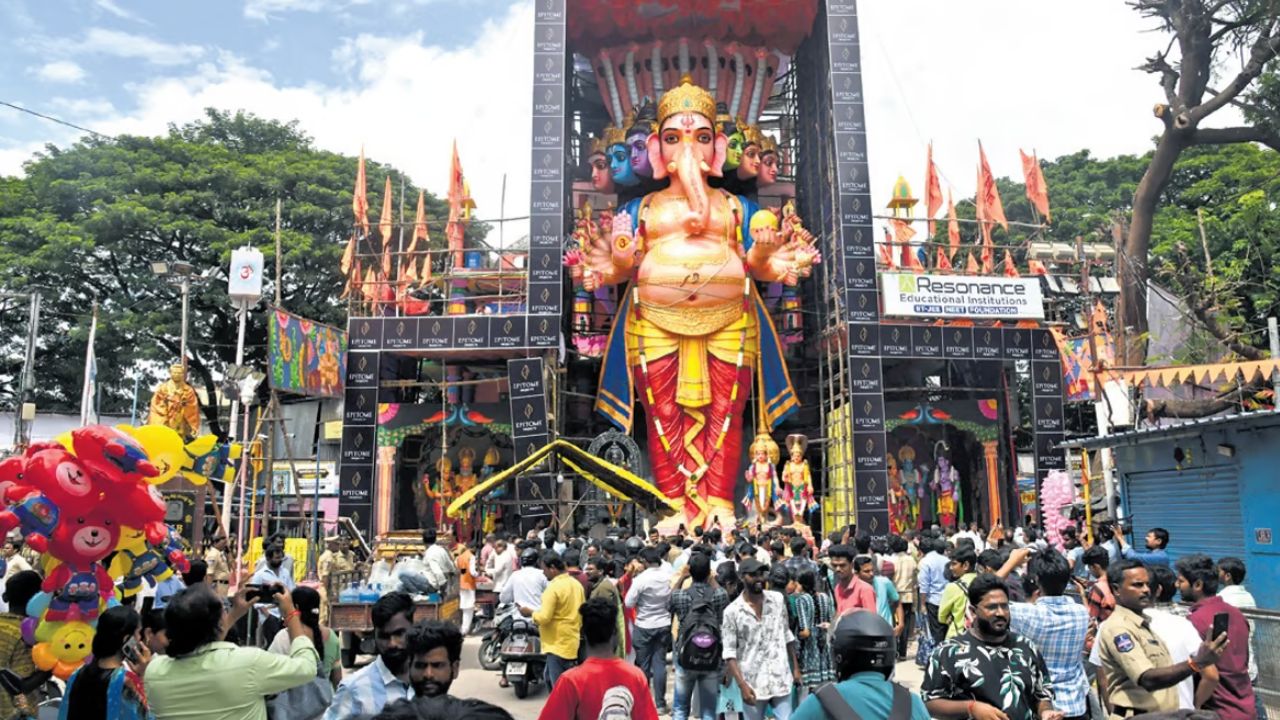
In the heart of Hyderabad, Khairatabad is set to unveil its tallest Ganesha idol in history, towering at an impressive 70 feet. This massive statue marks 70 years of the festival’s tradition in Khairatabad and serves as a symbol of the community’s enduring devotion. Each year, this iconic pandal draws thousands of devotees from across the city, becoming a focal point of the celebrations.
The preparation for the grand Khairatabad idol is a monumental task that involves months of planning and execution. Artisans, craftsmen, and volunteers work tirelessly to bring the intricate design to life, which this year, in keeping with the theme of sustainability, incorporates more eco-friendly materials than ever before.
A Surge in Eco-Friendly Ganesha Idols
Driven by increasing environmental awareness, many households and communities are choosing smaller Ganesha idols crafted from clay and painted with natural, biodegradable colors. The demand for these sustainable alternatives has led to a surge in activity among local artisans, who are now creating a variety of eco-friendly idols. Some of these are even made from cow dung, further emphasizing the community’s commitment to environmentally responsible practices.
Artisans like Ramu, a fourth-generation idol maker in Hyderabad, have seen a significant rise in orders for clay idols this year. “People are more conscious now,” Ramu says. “They want to celebrate without harming the environment. I’m happy that our traditional craft is helping make the festival greener.”
Many pandals across the city are also embracing this change, choosing clay idols over those made with plaster of Paris (PoP), which can take years to dissolve and often pollute water bodies. To further reduce environmental harm, some artisans are using herbal paints, which dissolve easily and do not release harmful chemicals during the immersion process.
Community Initiatives and Government Support
To encourage the adoption of eco-friendly idols, the Greater Hyderabad Municipal Corporation (GHMC) has launched a significant initiative, distributing 3.10 lakh clay Ganeshas free of cost to households across the city. This large-scale distribution is aimed at making eco-friendly options accessible to everyone, ensuring that environmental sustainability is not compromised by cost.
In addition to GHMC’s efforts, the Telangana Pollution Control Board (TPCB) and Hyderabad Metropolitan Development Authority (HMDA) are each providing 1 lakh clay idols across Hyderabad. This combined effort by municipal and state authorities underscores a commitment to promoting sustainable festivities.
“We want to ensure that while we celebrate, we also take care of our environment,” says a spokesperson from the GHMC. “These clay idols not only reduce pollution but also support local artisans who craft them.”
The Role of Local Artisans and the Market Response
The market response to these eco-friendly initiatives has been overwhelmingly positive. Local markets are buzzing with activity as vendors prepare for a flourishing season. Stalls selling clay idols are seeing brisk business, with customers often preferring idols made with natural colors and free from synthetic decorations.
Artisans are benefiting from this shift as well. With the increasing popularity of eco-friendly idols, many traditional craftsmen, who have faced challenges from cheaper, mass-produced PoP idols, are now experiencing a resurgence in demand for their more sustainable creations.
“We are seeing a revival in the traditional ways of making idols,” says Lalitha, a local artisan. “Clay idols are not only environmentally friendly but also deeply connected to our cultural roots. It’s wonderful to see people valuing this aspect again.”
Educational Campaigns and Public Awareness
In tandem with the distribution of eco-friendly idols, several educational campaigns are being conducted across the city to raise awareness about the environmental impact of Ganesha Chaturthi celebrations. These campaigns emphasize the importance of using biodegradable materials, proper disposal practices, and minimizing waste.
Workshops are also being held in schools and community centers to educate the younger generation on the significance of sustainable celebrations. Children are taught how to create their own clay Ganesha idols, promoting a hands-on understanding of eco-friendly practices.
Additionally, various NGOs and environmental groups have set up stalls in prominent locations, distributing pamphlets and conducting talks on the benefits of eco-friendly idols. These initiatives aim to create a ripple effect, encouraging more households to make the switch to sustainable choices.
The Impact on Water Bodies
One of the most significant environmental concerns during Ganesh Chaturthi is the immersion of idols in water bodies, which can lead to severe pollution. Idols made from PoP do not dissolve easily, releasing toxic substances and endangering aquatic life. In contrast, clay idols dissolve quickly and do not introduce harmful chemicals into the water.
To mitigate the environmental impact, the GHMC has set up multiple artificial ponds across the city for the immersion of clay idols. These ponds are designed to handle the dissolution process efficiently, ensuring that natural water bodies remain unaffected.
Volunteers and environmental groups are also active during the immersion process, guiding devotees to use designated immersion points and educating them on the importance of choosing eco-friendly options.
The Road Ahead: Sustaining the Momentum
While the shift toward eco-friendly Ganesha idols is a positive step, sustaining this momentum will require ongoing efforts from all stakeholders, including the government, community leaders, artisans, and the general public. The success of this movement in Hyderabad can serve as a model for other cities, demonstrating how traditional celebrations can be aligned with modern environmental concerns.
Looking ahead, there is potential for further innovation in the creation of sustainable idols. Research and development into new biodegradable materials and techniques could lead to even more environmentally friendly options in the future. Additionally, continued public awareness campaigns will be crucial in reinforcing the importance of sustainable practices.
As Hyderabad prepares to celebrate Ganesh Chaturthi with grandeur and devotion, the embrace of eco-friendly idols marks a meaningful shift in the city’s approach to the festival. By balancing tradition with environmental responsibility, Hyderabad is setting an example of how festivals can be celebrated in harmony with nature.