


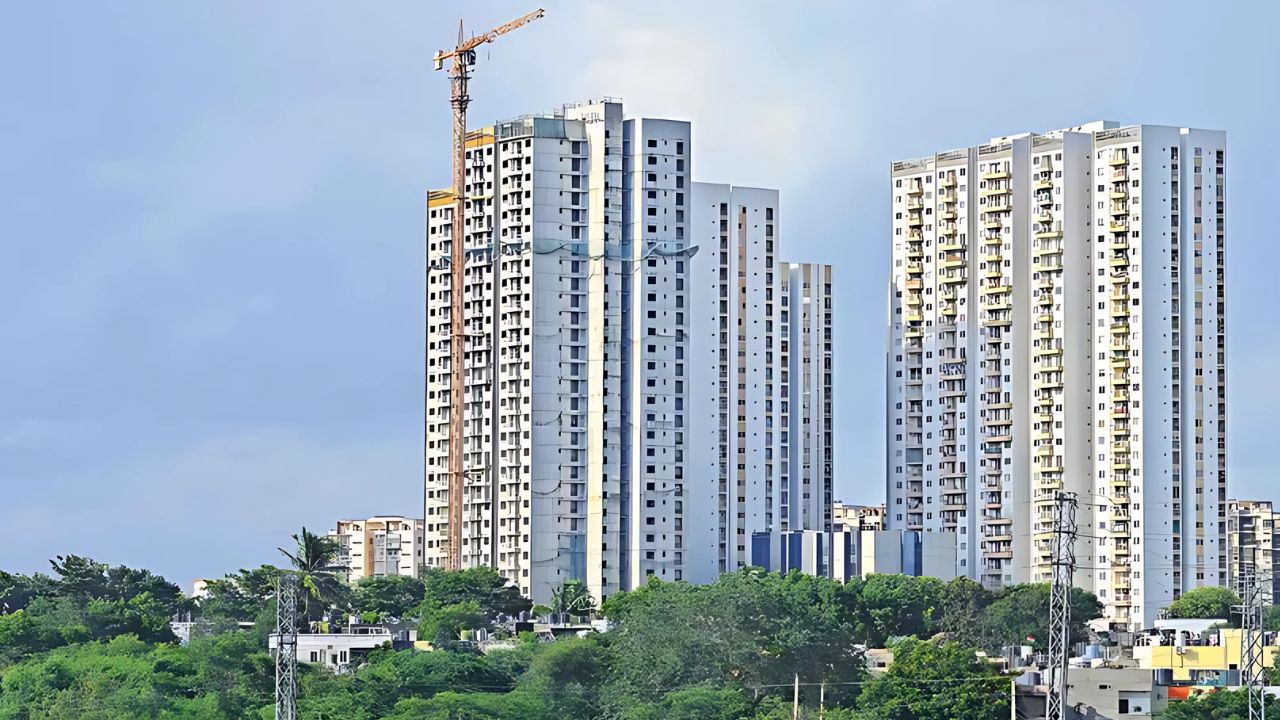
Hyderabad’s Real Estate Market: Is a Bubble About to Burst?
Hyderabad has experienced a remarkable real estate boom over the past decade, driven by a combination of rapid urbanization, robust economic growth, and a burgeoning IT industry. However, recent data suggests a potential slowdown in the city’s property market, sparking questions about whether Hyderabad’s real estate bubble might be on the verge of popping. Both developers and potential buyers are watching the market with bated breath, analyzing recent trends and registration data that hint at a softening demand in the city.
This article examines the factors contributing to Hyderabad’s real estate boom, explores recent data indicating a possible market shift, and analyzes the implications for developers, investors, and potential homebuyers.
Hyderabad’s Real Estate Boom: A Decade of Rapid Growth
Hyderabad has consistently ranked among the fastest-growing real estate markets in India, with residential and commercial projects sprouting throughout the city. The city’s affordability compared to other metro areas like Mumbai and Delhi, coupled with a strong employment base in IT, pharmaceuticals, and infrastructure development, has drawn in professionals and investors alike.
For nearly a decade, Hyderabad has experienced increasing demand for residential real estate, driven by migration from other parts of India, favorable government policies, and consistent job creation. The Telangana government’s proactive approach to infrastructure development, including the Hyderabad Metro Rail, IT parks, and improved road connectivity, has played a significant role in fueling real estate expansion.
Recent Signs of Softening Demand
According to the latest data from Knight Frank Research, there are indications that Hyderabad’s real estate market may be cooling. Despite a promising 34 percent year-on-year (YoY) increase in the overall market from January to September 2024, September’s numbers have shown a sharp decline, dropping by 22 percent compared to the same month in the previous year. In September 2023, the city saw 6,304 residential units registered, but in September 2024, that number fell to 4,903 units. The registration value also decreased, from ₹3,459 crore in September 2023 to ₹2,820 crore in September 2024.
This notable decline raises concerns, particularly as Hyderabad’s market has consistently shown resilience even amid economic challenges such as the COVID-19 pandemic. While the January-September data still reflects an upward trend, the sudden dip in September suggests a potential shift in market sentiment.
Inventory Concerns: Increasing Stock and New Project Launches
One of the primary concerns driving speculation about a potential real estate bubble in Hyderabad is the rapidly increasing inventory. New project launches continue to add stock to the market, but sales have not kept pace with the growing supply. This imbalance between supply and demand raises concerns about whether developers will be able to clear existing inventory or if the market will face a glut of unsold units.
Many developers are apprehensive about launching new projects, fearing that excess inventory could drive down property prices. If the current inventory remains unsold, developers may be forced to offer discounts or other incentives to attract buyers, potentially lowering property values and reducing profitability.
The Impact of Rising Property Prices
Another factor impacting Hyderabad’s real estate market is the consistent rise in property prices over the years. While this increase has benefited investors and homeowners, it has also priced out many potential buyers, especially in the mid-income segment. A significant portion of the city’s new developments, particularly luxury projects, target higher-income buyers. However, the sharp drop in luxury real estate sales noted in recent reports suggests a possible saturation in the high-end segment.
With fewer buyers able to afford homes in a market where prices are steadily rising, the pace of sales may slow, particularly for properties at the higher end of the price spectrum. This trend is causing developers to rethink their strategies, with some considering adjustments to pricing or a shift toward more affordable housing options.
Economic Factors and Changing Buyer Sentiment
Several economic factors are also contributing to shifts in Hyderabad’s real estate landscape. Rising interest rates, increasing inflation, and global economic uncertainty are impacting consumers’ purchasing power and making prospective buyers more cautious. As a result, fewer people are willing to take on new housing loans, which could lead to a further decline in sales.
Additionally, while Hyderabad’s IT sector remains robust, the global slowdown in the technology industry has caused some uncertainty among tech workers. Since many of Hyderabad’s real estate buyers are employed in the IT sector, any fluctuation in this industry can significantly impact housing demand. Many potential buyers are adopting a wait-and-watch approach, hoping that prices may stabilize or decrease in the coming months.
Developers’ Strategies: Rethinking New Launches and Pricing
As developers face increasing inventory levels and a slowing demand, they are considering several strategies to adapt to the shifting market conditions. One approach involves delaying new launches until the existing stock is absorbed. Some developers are also exploring the possibility of providing incentives, such as flexible payment plans, discounts, or added amenities, to attract buyers. However, there are limits to how much developers can reduce prices without impacting their margins.
Another consideration for developers is a shift towards affordable and mid-income housing segments. While luxury properties have historically been a significant component of Hyderabad’s market, developers may need to focus on creating homes that cater to the needs of middle-income families, particularly in light of the affordability concerns impacting the city’s real estate market.
The Role of Government Policies in Market Stabilization
Government policies and incentives can play a critical role in stabilizing the real estate market. In recent years, the Telangana government has introduced various policies to encourage housing development, particularly in the affordable segment. These policies have helped sustain Hyderabad’s real estate boom by attracting developers and investors to the city. However, as market conditions change, the government may need to consider additional measures to prevent an oversupply in the housing market.
Potential policy interventions could include tax benefits for developers who focus on affordable housing, relaxed norms for project approvals, or even subsidies for first-time homebuyers. Such initiatives could help stabilize the market by creating more demand in the affordable housing segment and ensuring that homeownership remains accessible to a larger demographic.
The Role of Speculation and Investor Behavior
Speculation has played a significant role in Hyderabad’s real estate boom, with investors betting on rising property values. However, speculation-driven markets are often vulnerable to sudden corrections, particularly if there is a mismatch between projected demand and actual buyer interest. As prices continue to climb, many investors may reconsider whether Hyderabad’s real estate market remains a viable long-term investment, particularly if they expect prices to peak or even decline.
Investor behavior will be a key determinant of the market’s future trajectory. If investors begin to exit the market or become less active, developers may struggle to sell new projects, adding to the inventory surplus and exacerbating the potential for a market correction.
Outlook: Is the Real Estate Bubble About to Burst?
While it is premature to declare that Hyderabad’s real estate market is in a bubble, there are signs of a potential slowdown. The recent decline in sales, rising inventory levels, and affordability concerns suggest that the market may be entering a phase of correction rather than experiencing an outright collapse.
A balanced correction, where prices stabilize or experience modest declines, could be beneficial in making housing more affordable and sustainable for the average buyer. However, an uncontrolled correction could result in significant losses for developers and investors, negatively impacting Hyderabad’s real estate sector and, by extension, the broader economy.
Ultimately, the resilience of Hyderabad’s real estate market will depend on various factors, including how developers and policymakers respond to the emerging challenges. While the city’s real estate market remains strong in many respects, it is essential for all stakeholders to approach the coming months with caution and flexibility.
Conclusion: What Lies Ahead for Hyderabad’s Real Estate Market?
The current situation in Hyderabad’s real estate market underscores the importance of closely monitoring demand trends and inventory levels. Developers, buyers, and investors are all advised to adopt a cautious approach, as market dynamics evolve in response to economic factors and changing buyer sentiment.
While the September dip in sales could indicate a temporary market fluctuation, sustained declines may signify a more profound shift in Hyderabad’s real estate landscape. The key for developers and investors will be to remain adaptable, focusing on meeting the needs of the city’s middle-income population and adjusting to evolving market conditions.
For prospective buyers, the current period could present opportunities to negotiate better deals, particularly if developers begin to offer discounts to clear existing inventory. However, it is equally essential for buyers to be mindful of the potential risks, particularly if prices continue to correct in the coming months.
Hyderabad’s real estate market stands at a pivotal juncture, where careful decision-making and strategic planning will determine the city’s real estate future.