




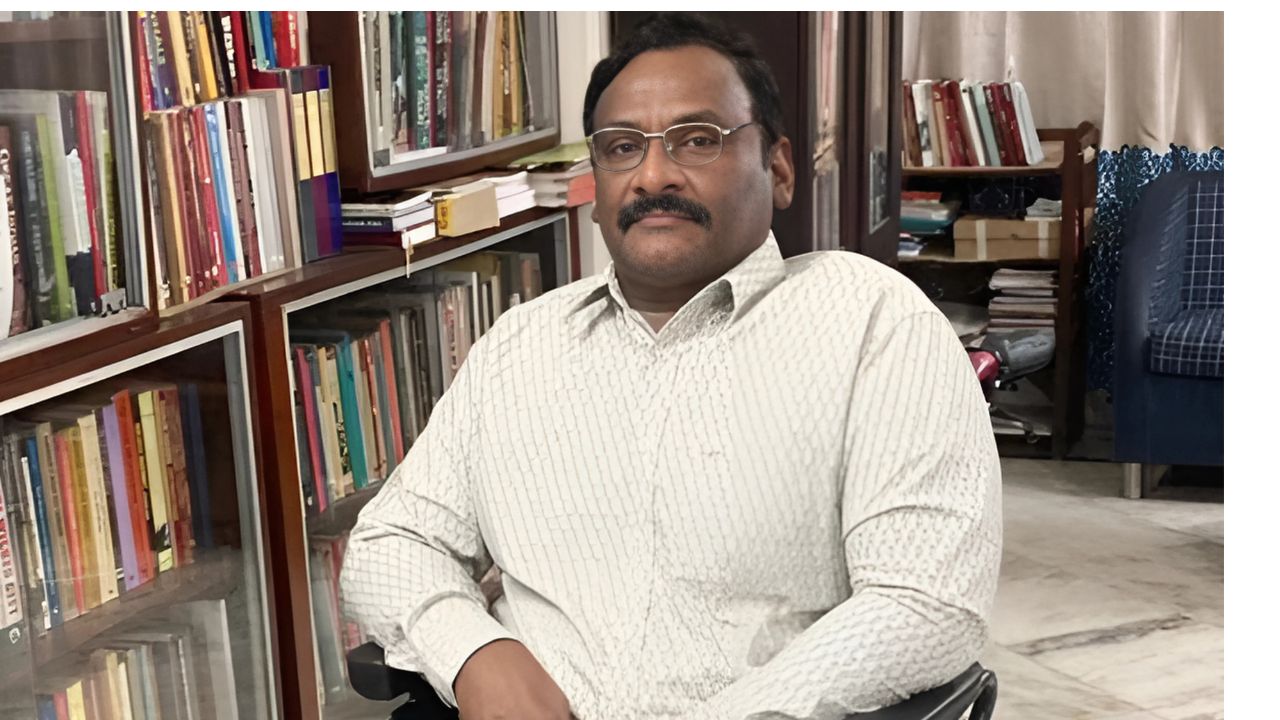
The Life and Legacy of Prof. G.N. Saibaba
Prof. Gokarakonda Naga Saibaba, a former professor at Delhi University, passed away on October 12, 2024, at the age of 57 at the Nizam’s Institute of Medical Sciences (NIMS) in Hyderabad. He had been battling serious health issues for several years, compounded by his confinement in prison, and was declared dead by doctors at 8:36 p.m. Saibaba’s life was marked by his intellectual contributions, his activism, and the controversies surrounding his arrest and imprisonment. A figure both revered and criticized, Saibaba’s legacy raises critical questions about state power, human rights, and the treatment of disabled prisoners in India.
Early Life and Academic Career
Born on January 1, 1967, in a small village in Andhra Pradesh, G.N. Saibaba grew up with a passion for education and activism. Despite being diagnosed with post-polio paralysis at a young age, he was determined to pursue his education and academic career. He became wheelchair-bound due to his disability, but that did not deter his ambitions.
Saibaba completed his studies and later pursued a Ph.D. in English literature. He became a professor at Ram Lal Anand College, Delhi University, where he taught English. As a scholar, Saibaba was known for his erudition and critical thinking. He contributed to debates on literature, culture, and politics, while advocating for the rights of marginalized communities.
He was not just a professor but an activist who championed several social causes, including the rights of Dalits, Adivasis, and the differently-abled. His academic work was closely tied to his advocacy for those living on the fringes of Indian society, especially the tribal communities affected by the state’s counterinsurgency measures.
Arrest and Imprisonment
The turning point in Saibaba’s life came on May 19, 2014, when he was arrested by the Maharashtra police for alleged links to Maoist organizations. His arrest was part of a broader crackdown by the Indian state on individuals and groups it believed to be supporting or sympathizing with the Maoist insurgency in central India. The police charged Saibaba with being a member of the banned Communist Party of India (Maoist) and accused him of engaging in anti-national activities.
The arrest shocked many in academic and human rights circles, as Saibaba had been a vocal critic of the Indian government’s policies in regions like Chhattisgarh, where tribal populations had been displaced due to industrial projects and security operations. His supporters argued that he was being targeted for his outspoken views on the state’s treatment of Adivasis and his criticism of government policies.
Saibaba’s arrest was widely condemned by human rights organizations, both in India and internationally. Amnesty International and Human Rights Watch called for his release, citing concerns over his health and the conditions in which he was being held. His disability made his incarceration particularly difficult. He was lodged in the Nagpur Central Jail, where he was denied access to adequate medical care, a point raised repeatedly by his family and lawyers.
Despite his deteriorating health, Saibaba was convicted in March 2017 by a sessions court in Gadchiroli, Maharashtra, under the Unlawful Activities (Prevention) Act (UAPA). He was sentenced to life imprisonment for alleged anti-national activities and waging war against the state. The court’s verdict drew widespread criticism from activists, academics, and human rights advocates who saw it as an attempt to silence dissent.
Health Struggles and Release
Throughout his imprisonment, Saibaba’s health worsened. He suffered from multiple ailments, including a heart condition, high blood pressure, and spinal issues, which were exacerbated by the lack of proper medical facilities in prison. His family and legal team repeatedly petitioned the courts for his release on medical grounds, citing his deteriorating condition and the severe impact of prison life on a person with his disabilities.
In March 2024, after nearly a decade of legal battles, Saibaba was finally released from prison. The decision came after mounting pressure from human rights organizations and growing concern about his health. By the time of his release, he had become a symbol of the state’s harsh treatment of political dissidents and disabled prisoners. His release was met with relief and celebration by his supporters, but Saibaba’s health had already deteriorated significantly during his incarceration.
Post-Release Life and Death
Following his release, Saibaba’s health remained fragile. He was admitted to the Nizam’s Institute of Medical Sciences in Hyderabad, where he continued to receive treatment for his numerous health issues. Despite his frailty, Saibaba continued to express his commitment to the causes he had championed throughout his life. In his final public appearance on August 23, 2024, he reiterated his belief in justice for India’s marginalized communities and the need for intellectuals to speak out against injustice.
On October 12, 2024, after months of battling illness, Saibaba passed away at the age of 57. He is survived by his wife, Vasantha Kumari, and their daughter, Manjeera. His death marks the end of a life filled with intellectual rigor, activism, and a steadfast commitment to speaking out for those who could not.
A Polarizing Legacy
Saibaba’s life and career were marked by controversy, and his legacy is likely to remain polarizing. To his supporters, he was a courageous intellectual who stood up for the oppressed and challenged the state’s authoritarianism. To his critics, he was a dangerous figure who supported violent insurgency and sought to destabilize the nation.
His arrest and conviction raised important questions about the limits of dissent in a democracy. Human rights organizations consistently argued that Saibaba’s case exemplified the misuse of laws like the UAPA to target political dissidents. They pointed to his disability and health issues as evidence of the state’s indifference to the human rights of prisoners, especially those with severe medical conditions.
At the same time, his critics within the government and the security establishment argued that his academic position and activism provided a cover for his alleged involvement with Maoist groups. The state maintained that Saibaba had used his position to recruit individuals into the Maoist fold and had played an active role in supporting the insurgency.
Human Rights and the Treatment of Disabled Prisoners
Saibaba’s death has reignited debates about the treatment of disabled prisoners in India. His case highlighted the lack of medical facilities and humane conditions in Indian prisons, particularly for those with disabilities.
Throughout his imprisonment, Saibaba’s lawyers argued that his confinement in a high-security prison, without access to the necessary medical care, amounted to cruel and inhuman treatment. His case became a rallying point for activists calling for prison reforms and better treatment of prisoners with disabilities.
The Indian legal system has provisions for the release of prisoners on medical grounds, but Saibaba’s case demonstrated the challenges that individuals face in securing their rights. His repeated requests for medical bail were denied by the courts, even as his condition worsened.
Conclusion
The death of Prof. G.N. Saibaba marks the end of a life dedicated to intellectual inquiry, activism, and the pursuit of justice for marginalized communities. His arrest, imprisonment, and eventual release highlighted the tensions between the state and political dissidents in India. Saibaba’s legacy will likely continue to inspire debate about the role of intellectuals in society, the limits of state power, and the rights of prisoners.
For his supporters, Saibaba will be remembered as a brave and principled figure who fought for the rights of the oppressed. For his detractors, his life will serve as a cautionary tale about the dangers of radicalism and anti-state activity. Regardless of where one stands on these issues, there is no denying that Saibaba’s life and death have left an indelible mark on the political and intellectual landscape of India.
As India continues to grapple with issues of dissent, democracy, and human rights, Saibaba’s life and legacy will remain a powerful reminder of the need for vigilance in defending the freedoms of all citizens, especially those who dare to challenge the status quo.


